Introduction
Developers are abandoning Claude Opus in favor of GLM-5.1 for one main reason: GLM-5.1 has matched Opus in core programming capabilities but costs only a fraction of the latter’s price. Additionally, being open-source allows for greater flexibility to meet real engineering needs.
This decision is driven by a combination of performance, cost, and flexibility.
Performance Parity and Key Tests
You might wonder if the performance can truly compare with Opus. The answer is yes: in tests closely resembling real software development, GLM-5.1 has surpassed Opus.
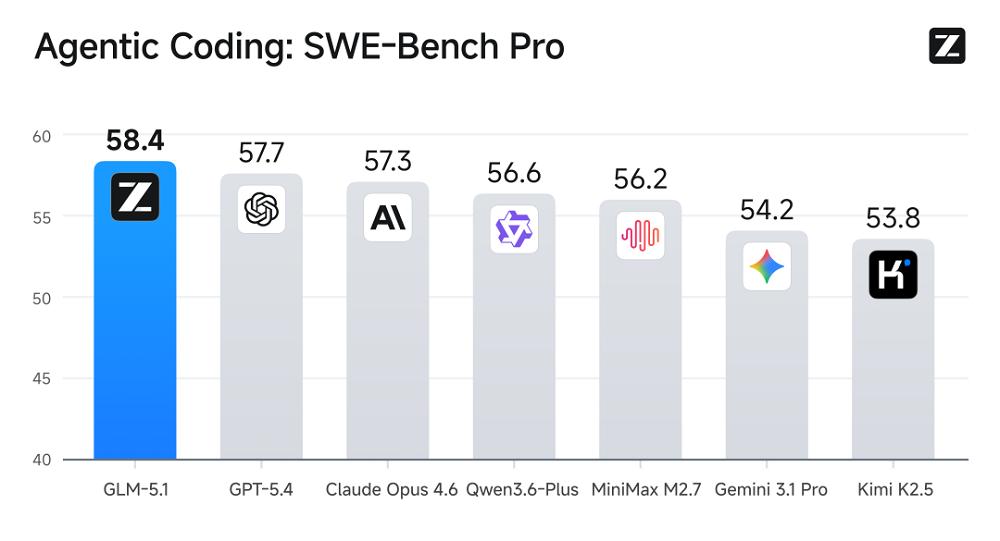
- Core Metrics Surpassed: In the authoritative SWE-Bench Pro software development benchmark, GLM-5.1 scored 58.4, setting a new global record, surpassing Claude Opus 4.6. This marks the first time a domestic open-source model has outperformed a closed-source flagship in core engineering capabilities.
- Overall Capability Close: In internal programming assessments by Zhizhu, GLM-5.1 scored 45.3, just 2.6 points shy of Opus 4.6’s 47.9, achieving 94.6% of the latter’s performance. Developer Toli reported that after running 113 programming tasks with both models, the user experience of GLM-5.1 felt “the same” as Opus.
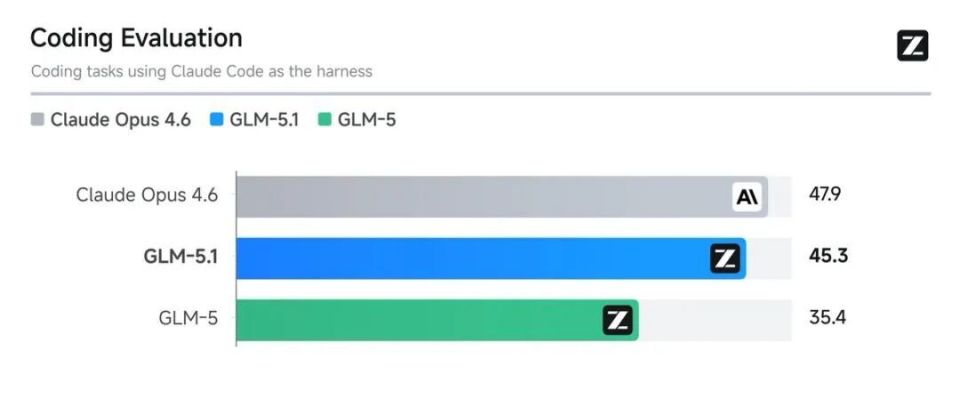
This indicates that for the vast majority of programming scenarios, the code quality produced by both models is indistinguishable. The performance gap has been closed, making the switch feasible.
Cost as a Decisive Factor: Task Cost Reduced by 97%
With performance levels being similar, the price itself becomes the answer. GLM-5.1 boasts a crushing cost advantage.
- Pricing Comparison: Zhizhu’s Coding Plan offers three times the token usage of Claude Code subscriptions at only one-third the price. Even after a price increase, GLM-5.1’s API call cost remains around 1/9 of Claude Opus.
- Real Case: Developer Beau Johnson switched the backend model of his OpenClaw Agent from Opus 4.6 to GLM-5.1, reducing the cost per task from $1000 to about $30, a staggering 97% decrease. The experience remained unchanged, but costs plummeted.
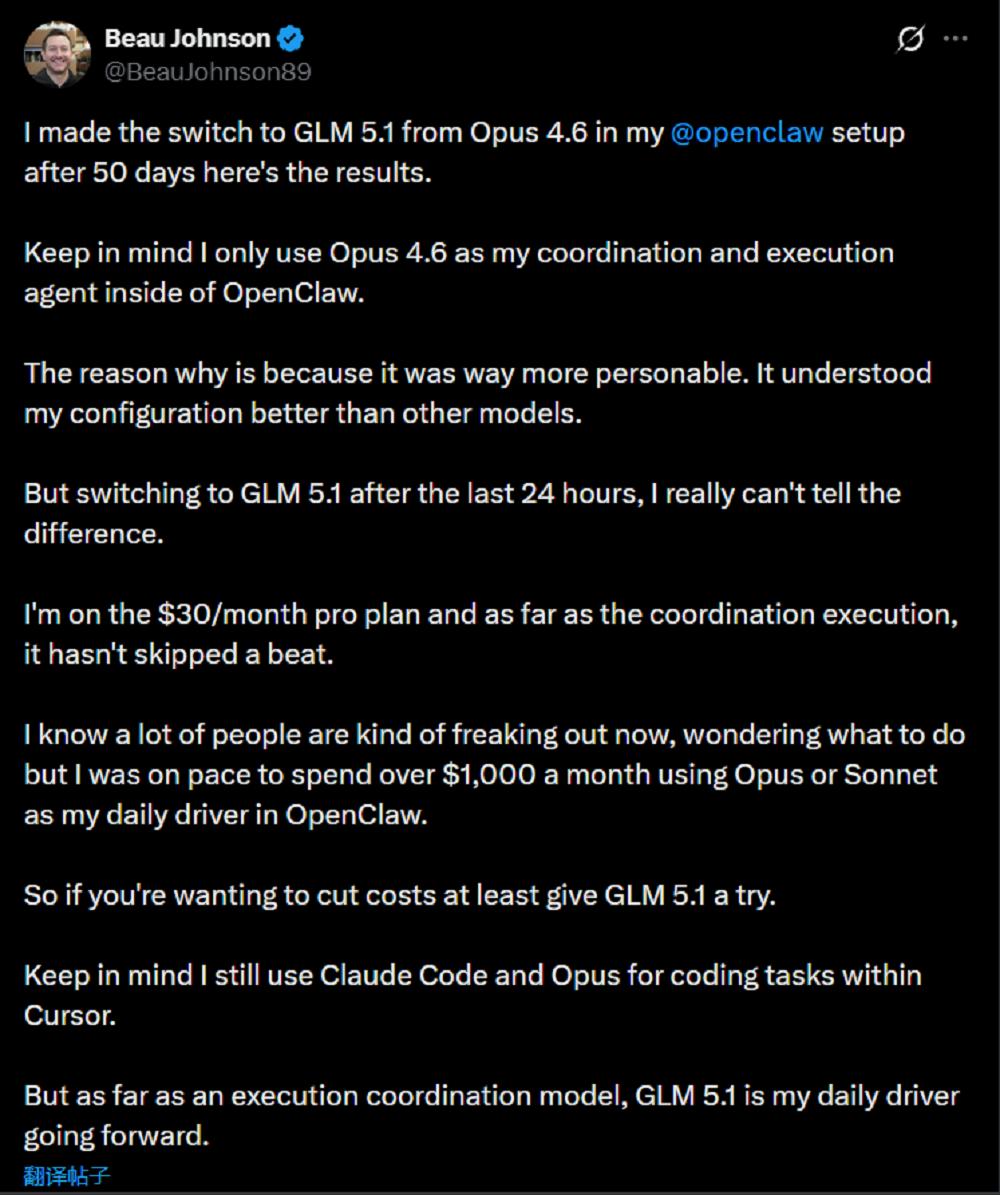
What does this price difference mean? If a development team has an annual cost of $100,000, switching to GLM-5.1 could reduce that to around $10,000. Such a level of cost reduction is significant in business decisions.
Long-Term Task Capability: Perfectly Suited for Engineering Development
You may ask if it can handle complex, long-term projects. This is precisely where GLM-5.1 excels, even exceeding traditional expectations.
GLM-5.1 is the first open-source model validated for “8-hour continuous work” capability in real engineering tasks. It can perform over 1200 steps based on an architectural sketch, independently delivering a fully functional Linux desktop system, equivalent to a week’s work for a four-person team.
- In tests, it autonomously conducted 655 rounds of iterative optimization, enhancing vector database performance by 3.6 times.
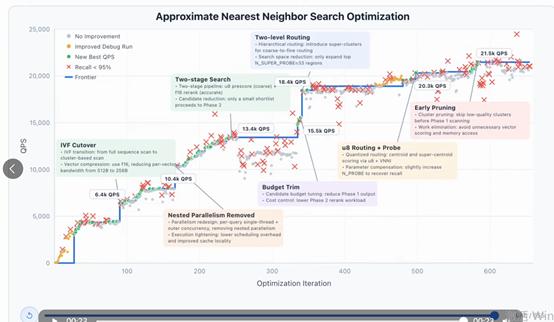
- When faced with unexpected issues (such as artificial network interruptions or coding errors), it can autonomously diagnose, call tools, and fix problems, demonstrating engineer-level stability.
This long-term planning, state continuity, and adaptive error correction capability transforms GLM-5.1 from a simple “code generator” into an intelligent agent capable of “delivering projects,” perfectly aligning with real development scenarios like building from scratch and iterative optimization.
Flexibility Offered by Open Source
The final key point is: open source. This means not just “free,” but empowering developers with autonomy.
- Self-Deployment and Customization: You can deploy GLM-5.1 on your own servers, fine-tuning and optimizing it according to business needs, avoiding constraints from API service providers’ terms and price fluctuations.
- Domestic Chip Compatibility: GLM-5.1 has successfully adapted to Huawei Ascend and Moore Threads MTT S5000 domestic chips, achieving a 30% efficiency improvement on Ascend chips. This provides crucial options for companies seeking supply chain security or specific hardware optimizations.
- Integration Convenience: It offers OpenAI-compatible interfaces, allowing developers to integrate it into existing workflows based on GPT or Claude APIs at minimal cost.
In summary, the logic behind developers’ choices is clear: for a fraction of the cost, they can achieve a programming experience comparable to top-tier closed-source models while gaining the autonomy and flexibility that open-source provides.
Although GLM-5.1 still has room for improvement in inference speed, this “performance parity + extremely low cost + open-source flexibility” combination is already sufficient to position it as the most formidable alternative to Claude Opus in the engineering development field.
Sobre o autor