The Rising Value of Guangxu Yuanbao
Could there be a chance that in your home, tucked away in a corner of an old drawer or hidden in a forgotten bag, lie a few rusty, seemingly insignificant copper coins? You might pick them up, feel their lightness, and think, “These old coins are worth nothing, better to throw them away.”
But you would never guess that this seemingly worthless “old copper piece” is actually a superstar in the world of Qing Dynasty copper coins—the Guangxu Yuanbao. Once just a common currency for change, it has skyrocketed in value in the collector’s market, with well-preserved ordinary versions selling for tens of thousands, while top-tier specimens like the Guangdong Province “Double Dragon Longevity” coin can fetch prices in the millions, attracting countless collectors.
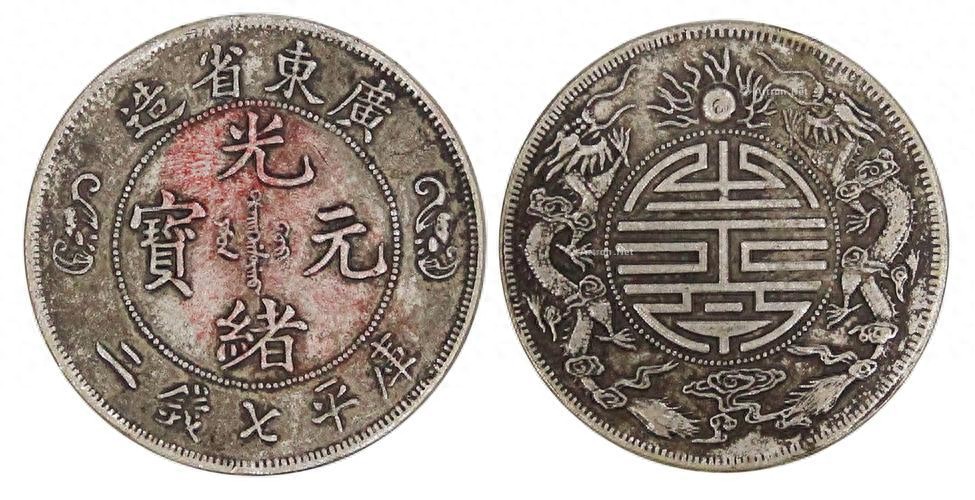
At the 2026 Spring High-End Coin Auction, a well-preserved Guangdong Province Guangxu Yuanbao “Double Dragon Longevity” coin was sold for an astonishing 1.68 million Hong Kong dollars after fierce bidding among dozens of collectors, setting a new record for Guangxu Yuanbao sales and sending shockwaves through the collecting community.
An experienced collector, witnessing the bidding, lamented, “I have an identical coin at home. Years ago, I was tricked into selling it for 500 yuan by an antique dealer. Seeing this million-dollar price now makes me regret it deeply!”
Such regrets are common in the collecting world. Many ordinary people unknowingly possess “million-dollar treasures” but fail to recognize their value, leading to neglect or being misled into selling them for a pittance, missing out on life-changing opportunities.
Today, I will provide a comprehensive 5000-word guide on this “top-tier copper coin of the Qing Dynasty”—the Guangxu Yuanbao. From its historical origins and the mysteries of its numerous versions to the story behind the high-priced Double Dragon Longevity coin, the secrets hidden in its rust, and tips for identifying authenticity and real market value, this article will ensure you never mistake a million-dollar treasure for scrap copper again. You will easily discern whether your Guangxu Yuanbao is worth a few dollars or a fortune!
Key Conclusion
The value of Guangxu Yuanbao varies dramatically—ordinary circulating versions in average condition are worth only a few thousand to tens of thousands, while rare versions in top condition can easily exceed hundreds of thousands. The Guangdong Province “Double Dragon Longevity” coin is exceptionally rare, with fewer than a hundred in existence, and top-tier specimens can command prices in the millions—over a hundred times the difference! Those few coins lying in your old drawer might just be “million-dollar treasures” capable of buying a house!
1. A Century of Change: Guangxu Yuanbao as the Benchmark of Qing Dynasty Copper Coins
To understand the collecting value of Guangxu Yuanbao, one must first grasp its historical significance. This small copper coin is not merely a convenient form of change; it is a testament to the tumultuous times of the late Qing Dynasty and a reflection of China’s modern currency reforms, embodying a century of change and legend. It is this historical weight that allows it to stand out among many Qing Dynasty copper coins, making it a “top-tier” collectible.
In the late 19th century, the Qing Dynasty was in turmoil, facing both internal strife and external threats. Following the Opium Wars, foreign powers invaded, leading to continuous domestic conflicts and an economy on the brink of collapse. The currency system was chaotic, with a mix of traditional square-hole coins, locally minted silver dollars, and foreign coins, compounded by the private minting of substandard currency by local warlords, severely hindering economic development and exacerbating the Qing government’s difficulties.
To save the crumbling economy and stabilize the currency system while raising military funds, the Qing government officially ordered currency reform in the 26th year of Guangxu (1900), beginning the minting of a new type of copper coin—the Guangxu Yuanbao. This coin broke away from the traditional square-hole design, adopting Western minting techniques and integrating elements of traditional Chinese culture, marking the beginning of modern mechanized copper coinage in China.
Compared to traditional square-hole coins, Guangxu Yuanbao has distinct advantages: it is uniformly shaped, consistently weighted, and available in various denominations, from one to twenty cash, catering to different social classes. It quickly replaced traditional square-hole coins, becoming one of the main circulating currencies in the late Qing Dynasty.
The scale of Guangxu Yuanbao minting was unprecedented. In just 11 years (1900-1911), the Qing government called upon 17 provinces and 20 mints to collaborate, establishing numerous mints to mass-produce Guangxu Yuanbao. Due to varying craftsmanship and standards among different mints, along with continuous adjustments in design and the addition of hidden marks, thousands of versions were produced, creating a “museum of versions” for Qing Dynasty copper coins.
Unfortunately, the 1911 Xinhai Revolution abruptly halted the minting of Guangxu Yuanbao. The once widely circulated coins faced large-scale melting and loss during the war years—many were melted down for jewelry or food, while others were buried or lost. After a century, few well-preserved Guangxu Yuanbao coins remain, especially the rare versions.
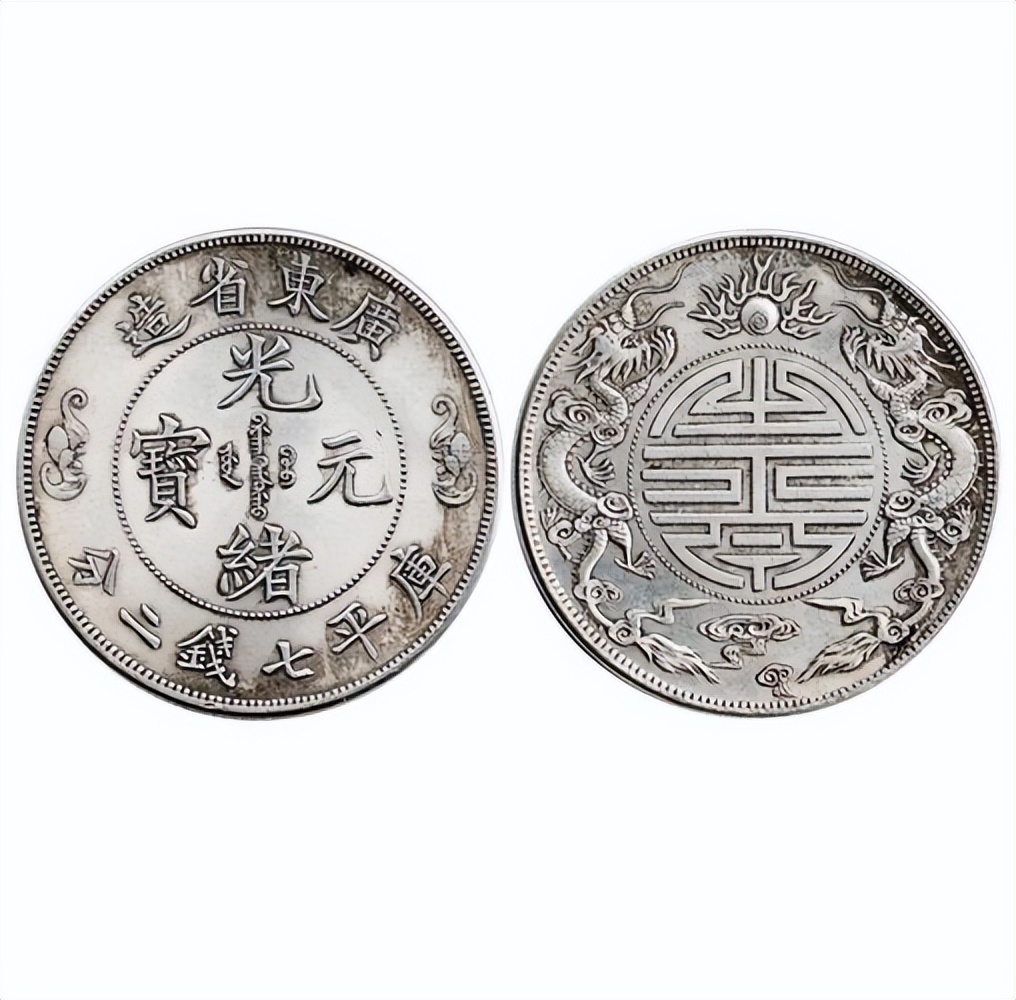
Elderly people often reminisce, “Back in the day, Guangxu Yuanbao was common in every household, used for buying candy and vegetables. Who would have thought that these unassuming copper coins would be worth so much decades later?”
It is this combination of “historical significance and scarcity” that lays the groundwork for the collecting value of Guangxu Yuanbao. It is not just a currency but a witness to history, encapsulating the rise and fall of the Qing Dynasty and documenting the arduous journey of modern currency reform in China. This high historical and cultural value is one of the core reasons it remains a “top-tier” collectible among Qing Dynasty copper coins.
Additionally, the design and craftsmanship of Guangxu Yuanbao represent the pinnacle of Qing Dynasty copper coins. The front features the inscription “Guangxu Yuanbao” in bold characters, with the minting province or bureau indicated above and the denomination below, flanked by exquisite decorative patterns that exude royal grandeur. The reverse usually depicts a vivid dragon motif, accompanied by clouds and flames, symbolizing “the dragon rules the world and the nation is prosperous,” showcasing a perfect blend of traditional Chinese culture and modern minting craftsmanship.
Now, a century later, this small copper coin has long exited the circulation market but has become a coveted item in the collecting community. It carries the last rays of the Qing Dynasty, witnessing significant changes in modern Chinese history, and boasts high historical and artistic value, along with its scarcity, making it a “hard currency” that collectors eagerly pursue, firmly occupying the “C position” in the Qing Dynasty copper coin collecting market.
2. The Maze of Versions: Thousands of Types, A Treasure Hunt with a Coin
Many people wonder why Guangxu Yuanbao has become the “top-tier” copper coin of the Qing Dynasty. Beyond its historical significance and scarcity, a key reason is its incredibly rich variety of versions—thousands of types create a “maze” that collectors find thrilling to navigate, enhancing its collecting value.
The minting of Guangxu Yuanbao involved 17 provinces and 20 mints, each with different craftsmanship and standards. Throughout the minting process, adjustments were made to fonts, patterns, dragon motifs, and denominations, even adding hidden marks, resulting in thousands of versions. Even seasoned collectors find it challenging to gather all types.
Statistics show that just the ten-cash version of Guangxu Yuanbao has hundreds of types. Variations across provinces, mints, and years can lead to significant differences in value, even with minor distinctions. This “one coin, many faces” characteristic turns collecting Guangxu Yuanbao into a treasure hunt, where discovering a rare version brings immense satisfaction.
Despite its small size, Guangxu Yuanbao conceals many “mysteries” within its dimensions; even slight differences can determine its value. Below, we will break down the core distinctions of Guangxu Yuanbao versions, making it easy for newcomers to understand the “treasure-hunting code.”
(1) Core Distinction 1: Minting Province/Bureau Determines Base Value
The front of Guangxu Yuanbao typically indicates the minting province or bureau, which is the most basic marker for distinguishing versions and a crucial factor in determining its value. Due to varying minting volumes and craftsmanship across provinces, the surviving quantities differ significantly, leading to notable price disparities.
Among them, the most scarce and valuable are the Guangxu Yuanbao minted in Guangdong, Hubei, and Jiangsu provinces. Particularly, the Guangdong version, known for its exquisite craftsmanship and limited surviving quantity, is considered the “noble” type among Guangxu Yuanbao. Even ordinary specimens of the Guangdong version can fetch prices ranging from tens of thousands to hundreds of thousands, while rare versions can easily reach millions.
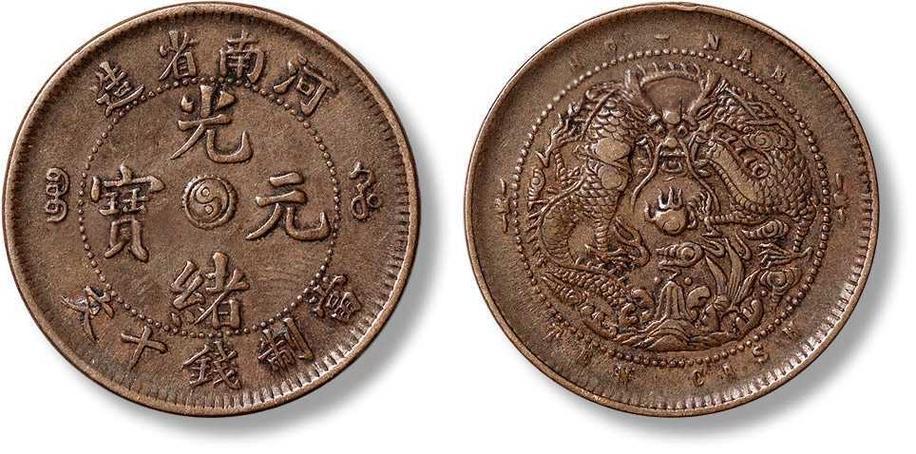
Next are the Hubei, Jiangsu, and Zhejiang versions, which also have high craftsmanship levels and relatively low minting volumes, making them scarce and thus more expensive. Ordinary specimens of these versions are typically priced around tens of thousands.
Conversely, provinces with larger minting volumes, such as Henan, Shandong, and Sichuan, have more abundant surviving quantities, resulting in more affordable prices, with ordinary specimens ranging from a few thousand to tens of thousands, making them suitable for novice collectors.
For example, an ordinary Henan Province Guangxu Yuanbao ten-cash coin is valued at approximately 3000-5000 yuan, while an ordinary Guangdong Province Guangxu Yuanbao ten-cash coin can reach 50,000-80,000 yuan, a difference of over tenfold!
(2) Core Distinction 2: Fonts and Patterns, Subtle Differences Hide “Price Codes”
In addition to the minting province, the fonts and patterns on Guangxu Yuanbao are also key factors in distinguishing versions and determining value. Even within the same province and denomination, subtle differences in fonts and patterns can turn a coin into a “rare treasure.”
- Font Differences: The four characters “Guangxu Yuanbao” on the front can be in different styles, such as regular or clerical script. Some fonts are bold and strong, while others are round and full. The denomination below may vary in phrasing, such as “Ten Cash” or “Twenty Cash,” with differences in font size and thickness. Even within the same font, variations in stroke thickness or character positioning can lead to different versions.
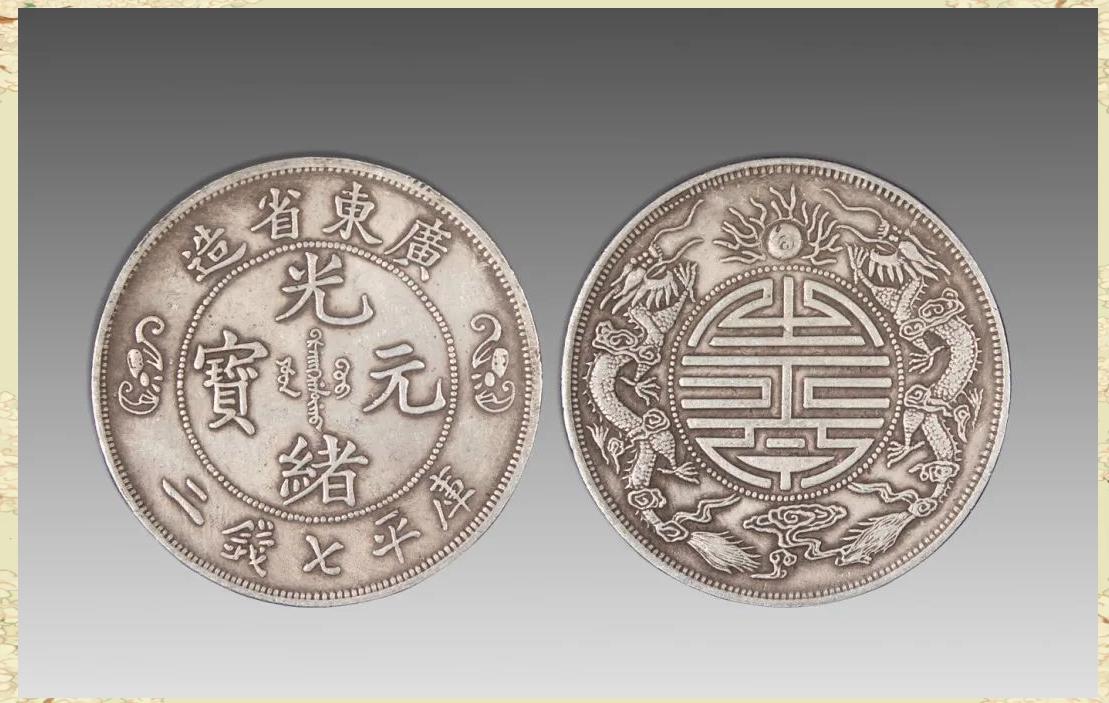
For instance, within the Guangdong Province Guangxu Yuanbao, the “Longevity” character can be written in both traditional and simplified forms. This single character’s difference can lead to a price gap of tens of thousands—traditional “Longevity” versions are rarer and can exceed one million, while simplified versions are priced around hundreds of thousands.
- Pattern Differences: The decorative patterns on the sides of the front can include plum blossom patterns, chrysanthemum patterns, or star patterns, with variations in quantity, size, and arrangement that may distinguish versions. The dragon motifs on the reverse also exhibit significant variation, with different styles such as coiled dragons, seated dragons, or flying dragons. The density of dragon scales, the shape of claws, and the orientation of tails can all differ. For example, a Guangxu Yuanbao with clear dragon scales and sharp claws may be valued at 100,000-150,000 yuan, while a version with unclear scales and damaged claws may only be worth 10,000-20,000 yuan—a tenfold difference.
(3) Core Distinction 3: Hidden Marks and English Letters, Concealing “Anti-Counterfeiting Codes”
To prevent counterfeiting, minting bureaus added hidden marks during the production of Guangxu Yuanbao. These marks are essential for distinguishing versions and verifying authenticity, making the “treasure hunt” even more exciting.
Hidden marks can take various forms, such as small notches in the strokes of characters, tiny stars in the corners of patterns, or symbols between English letters. Some marks are even concealed within the scales of dragon motifs, making them nearly impossible to detect without careful observation.
In addition to hidden marks, the English letters along the edge of the coin can also help distinguish versions. The reverse edge of Guangxu Yuanbao typically bears the English name of the minting province, such as “Kwangtung Province” for Guangdong and “Hupeh Province” for Hubei. Variations in the arrangement, font size, and even missing or deformed letters can indicate different versions.
Many collectors use magnifying glasses to closely examine every detail of Guangxu Yuanbao, searching for hidden marks and differences in English letters. Discovering a previously unseen version can be as exhilarating as an archaeologist unearthing a new site. One collector found a hidden mark between the scales of a dragon motif, and after authentication, it turned out to be an extremely rare trial version, eventually selling for 860,000 yuan, leading to a life-changing fortune.
(4) Quick Tips for Beginners: 30 Seconds to Distinguish Guangxu Yuanbao Versions
Many beginners feel overwhelmed by the multitude of Guangxu Yuanbao versions, but by remembering three simple tips, you can quickly distinguish them in 30 seconds without professional tools or expert help:
- Look at the Front: First, check the minting province/bureau, then examine the font of “Guangxu Yuanbao” and the denomination—this is the most basic method of distinction.
- Look at the Back: Focus on the dragon motif, observing the shape of scales, claws, and tails, along with the orientation of clouds—these are key to distinguishing versions.
- Look at the Details: Use a magnifying glass to inspect the patterns and English letters on the coin, searching for hidden marks. Differences in these marks and letters often reveal rare versions.
A small reminder: If your Guangxu Yuanbao is heavily rusted and you can’t see the fonts, patterns, or hidden marks clearly, you can gently wipe it with a soft cloth to remove surface rust (be careful not to apply too much pressure to avoid damaging the patina) before identifying it. If you’re still unsure, consult a reputable collector’s shop or a professional appraisal agency for assistance.
3. The Million-Dollar Legend: Why the Double Dragon Longevity Coin Commands Such High Prices
Among the thousands of versions of Guangxu Yuanbao, one stands out as the “top-tier of the top-tier”—the Guangdong Province “Double Dragon Longevity” coin. This coin is not an ordinary circulating currency but a commemorative coin specially minted by the Qing court to celebrate Empress Dowager Cixi’s 70th birthday. With an extremely limited surviving quantity, it often sells for prices in the millions, becoming a coveted “treasure” for countless collectors.
At the 2026 Spring High-End Coin Auction, a PCGS-graded MS63 Guangdong Province Guangxu Yuanbao “Double Dragon Longevity” coin was sold for 1.68 million Hong Kong dollars after intense bidding, once again breaking the sale record for Guangxu Yuanbao. Many collectors remarked, “The Double Dragon Longevity coin is the ‘ceiling’ of Qing Dynasty copper coins; owning one signifies status and strength.”
So, what makes the “Double Dragon Longevity” coin so special that it can sell for such high prices? What historical stories lie behind it?
(1) The Origin of the Double Dragon Longevity Coin: A Commemorative Coin for Cixi’s 70th Birthday
Let’s turn back to 1894, the year of Empress Dowager Cixi’s 70th birthday. Despite the Qing Dynasty’s internal and external troubles, Cixi extravagantly celebrated her birthday with a grand banquet. To assert her authority and commemorate her birthday, the Qing court commissioned the Guangdong Mint to produce a special commemorative coin—the Guangdong Province Guangxu Yuanbao “Double Dragon Longevity” coin.
This commemorative coin was designed to the highest standards, using the best minting techniques and quality copper, taking months of careful design and repeated trial minting before finalization. Its design integrates the “longevity” and “dragon” motifs from traditional Chinese culture, symbolizing “double blessings and the dragon ruling the world,” showcasing royal grandeur.
The front of the Double Dragon Longevity coin features a prominent “Longevity” character, surrounded by exquisite patterns, with “Guangdong Province” above and “Kuwait Seven Cash Two” (denomination) below, adorned with symmetrical plum blossom patterns on either side, presenting a simple yet elegant design with auspicious meanings.
The reverse showcases two vividly depicted flying dragons, spiraling to form the shape of the “Longevity” character, with clear and distinct scales, sharp claws, and an imposing gaze, as if ready to soar; surrounding the dragon motifs are the English inscription “Kwangtung Province” and the denomination, with bold fonts and rich patterns, blending traditional Chinese culture with Western minting elements.
Notably, the minting quantity of the Double Dragon Longevity coin is extremely limited. Originally, this commemorative coin was primarily used as rewards during Cixi’s birthday banquet, given to nobles and foreign diplomats, with only a small number reserved for collectors, and most were ordered to be recalled and melted down after the banquet to prevent them from entering the public domain. Today, the surviving Double Dragon Longevity coins number fewer than a hundred, making them exceedingly rare.
Veteran collectors often say, “Each Double Dragon Longevity coin has its own story. It is not just a commemorative coin but a testament to Cixi’s luxurious lifestyle and a snapshot of late Qing history—this historical value is priceless.”
(2) Core Reasons for the Million-Dollar Price of the Double Dragon Longevity Coin: Scarcity + Craftsmanship + Historical Value
The reason the Double Dragon Longevity coin can command million-dollar prices is not coincidental; it is the result of the combination of “scarcity, craftsmanship, and historical value,” all of which are essential. This is also why it surpasses all other Guangxu Yuanbao versions to become the “top-tier of the top-tier.”
- Core Reason 1: Extremely Limited Surviving Quantity, Scarcity Drives Value
The core logic in the collecting world is always “scarcity drives value.” As a commemorative coin for Cixi’s 70th birthday, the Double Dragon Longevity coin was minted in limited quantities, and due to the Qing court’s subsequent recall and melting, along with a century of war and loss, only a few dozen well-preserved examples exist today. Among these, those in pristine condition are even rarer, making them akin to winning the lottery.
According to authoritative data in the collecting community, the total mintage of the Double Dragon Longevity coin is less than 1000 pieces. After a century of wear and tear, only a few dozen remain, most of which are held in museums or by seasoned collectors, making them extremely hard to find on the market. This extreme scarcity has made the Double Dragon Longevity coin a “treasure” that collectors scramble to acquire, naturally driving its price to astronomical heights.
I know a veteran collector who has been collecting Guangxu Yuanbao for over 30 years and possesses thousands of different versions, yet he has never found a Double Dragon Longevity coin. He remarked, “Finding a Double Dragon Longevity coin is incredibly difficult. I’ve spent over a decade searching through national collecting markets and still haven’t found a single well-preserved one. Its scarcity is its core value.”
- Core Reason 2: Pinnacle of Craftsmanship, Imitations Are Hard to Replicate
The minting craftsmanship of the Double Dragon Longevity coin is considered the pinnacle of late Qing minting techniques, and even today, it is challenging to replicate. It employs high-pressure minting processes that require exceptional standards for minting equipment, copper purity, and engraving techniques, achievable only by the top artisans at the Guangdong Mint.
Every detail of the dragon motif on the Double Dragon Longevity coin is exquisitely carved, with each scale distinct and neatly arranged, sharp claws, and an imposing gaze. The “Longevity” character and fonts on the front are bold and clear, with no blurriness or roughness; the copper used is of high purity, with a warm sheen and naturally even patina, retaining its exquisite quality even after a century.
This top-tier minting craftsmanship makes imitations difficult to create—most imitations on the market use standard minting processes, resulting in blurred dragon motifs, lack of three-dimensionality, rough fonts, and low copper purity. A careful inspection will reveal the flaws.
- Core Reason 3: Deep Historical Value, Carrying a Century of Legend
The Double Dragon Longevity coin is not merely a commemorative coin but a witness to history, encapsulating a century of change and legend. As a commemorative coin for Cixi’s 70th birthday, it reflects the opulence and decay of the late Qing Dynasty, serving as a “living fossil” of modern Chinese history, carrying immense historical value.
In the collecting world, “historical significance” is often a critical factor in determining a collectible’s value. The Double Dragon Longevity coin, as one of the most representative commemorative coins of the late Qing Dynasty, carries memories of Cixi’s birthday and the decay of the Qing government, making its historical value far exceed its monetary worth.
Many collectors seek the Double Dragon Longevity coin not just for its potential for appreciation but to preserve a piece of history and memory. They believe that each coin carries its own story, reflecting a century of history, and this historical value is priceless.
(3) The Real Market Value of the Double Dragon Longevity Coin: Condition Determines Price, Differences Can Reach Hundreds of Times
Although the Double Dragon Longevity coin often sells for millions, not all of them fetch such high prices. Its value primarily depends on its condition and grading; different conditions can result in price differences of up to hundreds of times. New collectors must be clear about this to avoid being misled by inflated online prices.
- Lower Grade (with obvious scratches, severe oxidation, blurred dragon motifs, incomplete fonts, and damaged edges): Market price 500,000-800,000 yuan (extremely rare);
- Medium Grade (with minor scratches, slight oxidation, clear dragon motifs, mostly intact fonts, and edges): Market price 800,000-1,200,000 yuan;
- Upper Grade (with no obvious scratches, slight oxidation, three-dimensional dragon motifs, intact fonts, and edges): Market price 1,200,000-1,500,000 yuan;
- Top Graded Version (PCGS MS63 or above, with no scratches, no oxidation, perfect dragon motifs, fonts, and edges): Market price 1,500,000-2,000,000 yuan (based on the 2026 sale of 1.68 million).
A small reminder: 99% of the “Double Dragon Longevity coins” on the market are imitations. True authentic Double Dragon Longevity coins are exceedingly rare, and ordinary people are unlikely to encounter them. Do not harbor any illusions that your coin is a “million-dollar coin.”
4. The Rust Color Code: Is Older Copper Worth More? Understanding Rust to Avoid Paying Tens of Thousands in Intelligence Tax
Many new collectors of Guangxu Yuanbao fall into the misconception that newer coins are worth more and that cleaner coins are more valuable. In fact, the opposite is true for Guangxu Yuanbao; the rust (patina) is a testament to the passage of time and is crucial for identifying authenticity, determining age, and influencing value. A naturally patinated old copper coin is often worth more than a brand-new coin.
Having endured a century, Guangxu Yuanbao will naturally oxidize, forming a thin layer of rust, known as “patina.” This patina is a natural oxidation layer formed through prolonged exposure to air and moisture, protecting the coin from further oxidation while reflecting its age and historical charm.
In contrast, most imitations have artificially created patinas that appear stiff and forced, lacking the natural aging quality. By understanding the nuances of rust, you can easily identify authenticity and avoid paying tens of thousands in intelligence tax. Below, we will analyze the “time code” hidden in the rust of three Guangxu Yuanbao coins, all of which are “Guangdong Province Kuwei Seven Cash Two” versions, helping beginners easily learn.
(1) Authentic Patina: Natural and Warm, with Distinct Layers (Coin A)
Coin A is an authentic Guangxu Yuanbao, with its rust (patina) displaying a natural and warm hue. The central copper green is a peacock green, with even patina on the edges, oxidizing from the edges inward, layered and distinct, without noticeable spots or scratches, exuding a rich sense of history.
This natural patina is formed through a century of natural oxidation, with an even color and fine texture. Gently wiping it will not cause color loss or flaking. Moreover, the color of natural patina changes with light, exhibiting different luster, something that artificial patina cannot replicate.
Experts can easily identify that Coin A is older and of better quality, naturally increasing its value. An authentic Guangxu Yuanbao with natural patina is worth dozens or even hundreds of times more than a shiny imitation without patina.
(2) Poor Patina: Post-Care, Reverse Patina (Coin B)
Coin B is also an authentic Guangxu Yuanbao, but its patina is classified as “poor patina,” significantly lowering its value compared to Coin A. This coin’s center is shiny, lacking rust, while the edges exhibit a ring of dark brown rust, indicating a “reverse patina” caused by post-care.
Many collectors, upon acquiring copper coins, feel that the rust is unattractive and scrub the surface with sandpaper or steel wool, leading to a shiny center while the edges remain partially rusted, creating an awkward contrast.
This type of reverse patina damages the coin’s original state, reducing its collectible value. Although Coin B is authentic, its damaged patina lowers its market price by 30%-50% compared to Coin A, costing tens of thousands.
A small reminder: When collecting Guangxu Yuanbao, be sure to protect its patina. Do not scrub or polish it casually; even if the rust appears unattractive, it is a mark of time. Preserving the original patina is essential to maintaining its collectible value.
(3) Fake Patina: Illusory Rust, Easily Identifiable (Coin C)
Coin C is a counterfeit Guangxu Yuanbao, with its rust being artificially created “floating rust” that reveals its flaws at first glance. This coin appears dull all over, with a loose rust layer that falls off upon touch. Gently wiping it will result in color loss or leave black marks, lacking any natural aging quality.
Methods for artificially creating patina often involve soaking the coin in chemical agents or applying rust powders to induce rapid rusting. This rust appears stiff and uneven, with no layers, and can easily flake off.
Many newcomers, unfamiliar with the nuances of rust, can easily be deceived by this fake patina, spending tens of thousands on an imitation, ultimately losing their investment. By closely observing, one can identify the flaws of fake patina: colors that are too dark or too bright, loose and easily detachable rust, and a lack of natural layers that appear overly forced.
Quick Tips for Beginners: 3 Steps to Quickly Identify Authentic Patina and Avoid Intelligence Tax
- Look at the Color: Natural patina is even and warm, with historical charm, changing with light; fake patina appears stiff and uneven, either too dark or too bright, lacking natural luster.
- Feel the Texture: Natural patina has a fine texture and adheres well. Gently wiping it will not cause color loss or flaking; fake patina is loose and lacks adherence, easily flaking off upon touch.
- Observe the Layers: Natural patina has distinct layers, with oxidation traces spreading from the edges inward, showing clear transitions; fake patina lacks layers, with chaotic rust patterns and no transitions, appearing overly deliberate.
5. Stories of Joy and Regret in the Collecting Community: Some Strike Gold, Others Sell for Pennies
With the skyrocketing popularity of Guangxu Yuanbao, especially after the Double Dragon Longevity coin fetched 1.68 million, many amusing stories have emerged in the collecting community. Some have unexpectedly turned a Guangxu Yuanbao into a “million-dollar fortune,” while others have regrettably sold their million-dollar treasures for mere pennies, and some have blindly followed trends, falling victim to scams. These stories reflect the heated market and serve as a warning.
(1) Joyful Stories: Finding a Double Dragon Longevity Coin Worth 1.2 Million
Last year, I met a man named Mr. Li, an ordinary office worker with no knowledge of collecting. During the Spring Festival, he returned to his hometown to clean out his old house and found a rusty Guangxu Yuanbao in an old wooden box. It looked unremarkable, and he thought it was just scrap copper, planning to sell it for a few dozen yuan.
Just as he was about to sell the coin, a friend who was a collector happened to visit. Upon seeing the coin, he was excited and quickly examined it. After a few minutes, his friend exclaimed, “You are so lucky! This is actually a Guangdong Province Guangxu Yuanbao Double Dragon Longevity coin, and in decent condition, it can sell for over 1 million!”
Mr. Li couldn’t believe it, thinking his friend was joking: “This old copper piece is worth 1 million? Don’t fool me!” His friend explained the history and characteristics of the Double Dragon Longevity coin, showing him market trends and auction records on his phone. Only then did Mr. Li realize that his “old copper piece” was a “million-dollar treasure.”
Following his friend’s advice, Mr. Li sent the coin to a reputable appraisal agency, where it received a PCGS MS62 rating. Soon after, a collector contacted him, willing to purchase the Double Dragon Longevity coin for 1.2 million. Mr. Li readily agreed, transforming his find into 1.2 million, equivalent to his salary over a decade.
Mr. Li chuckled, “I never expected to find such a treasure while cleaning out my old house. I was just hoping for a few dozen yuan! Now I’ll never casually throw away old items again; there might be other treasures at home!”
Another story involves Ms. Chen, a retired woman who inherited a Guangxu Yuanbao from her grandfather. She kept it in her wardrobe for decades without paying much attention. Last year, after hearing that Guangxu Yuanbao was valuable, she took the coin out, snapped some photos, and sent them to a legitimate collector’s shop. The owner immediately offered her 180,000 yuan, leaving Ms. Chen stunned and unable to believe her eyes.
Later, she sold the Guangxu Yuanbao for 180,000, using the money to buy a school district house for her grandson, bringing joy to her family. Ms. Chen said, “I never expected that my grandfather’s old copper piece could help solve such a big problem. It truly is a family heirloom!”
(2) Regretful Stories: Selling a Million-Dollar Treasure for 500 Yuan
With joy comes regret. In the collecting community, the most regrettable stories involve people who, not understanding the market, sold million-dollar treasures for mere pennies, only to see the soaring prices later and lament their decisions.
I know a collector named Mr. Zhao, who has been collecting Guangxu Yuanbao for over 30 years. He once owned a top-quality Double Dragon Longevity coin, which he purchased from an elderly person for 2000 yuan twenty years ago. In 2010, an antique dealer approached him, offering 500 yuan for the Double Dragon Longevity coin. Mr. Zhao, not understanding the versions and conditions, thought 500 yuan was a good deal and sold it without hesitation.
It wasn’t until 2026 that he learned of the 1.68 million sale of the Double Dragon Longevity coin, realizing that he had sold a top-quality version for just 500 yuan, which today would fetch at least 1.5 million. Mr. Zhao lamented, “If only I had understood the market back then, I wouldn’t have been so foolish to sell a million-dollar treasure for 500 yuan. It was a moment of ignorance that cost me a fortune!”
Another story involves a young man who was given a Guangxu Yuanbao by his grandfather. Thinking it was ugly and rusty, he carelessly tossed it aside. Later, during a home renovation, he mistook the coin for scrap and sold it for 5 yuan.
Last year, after hearing about the value of Guangxu Yuanbao online, he hurried to the scrap yard to find the coin, but it had already been sold. He said, “Looking back, I regret it so much. If I had just taken care of it, it could have been worth tens of thousands today. Even if I didn’t sell it, keeping it as a family heirloom would have been great. It was a careless mistake that cost me a fortune!”
Such regrets abound in the collecting community. Many people once thought Guangxu Yuanbao was just ordinary scrap copper, worth little, and either tossed it aside or were tricked into selling it cheaply by antique dealers. They never imagined that decades later, these seemingly insignificant “scrap copper pieces” would become “high-priced treasures” in the collecting market, with their value skyrocketing.
This serves as a reminder that the value of old items lies not only in their scarcity but also in their irreplaceability; once lost, they can never be recovered. If you have Guangxu Yuanbao at home, do not casually discard or sell it cheaply. Take a few minutes to understand the versions, assess their condition, and gauge the market before making a decision.
(3) Warning Stories: Beware of Scams in Collecting
With the explosive popularity of Guangxu Yuanbao, especially after the Double Dragon Longevity coin fetched 1.68 million, many unscrupulous individuals have seen an opportunity and started various scams to deceive inexperienced collectors into paying “intelligence tax.” I have summarized several common scams that everyone should be wary of to avoid being cheated.
Scam 1: Price Inflation, Exaggerating Value
Many scammers post online, claiming that “all Guangxu Yuanbao can sell for 1 million” or “ordinary Guangxu Yuanbao can sell for 500,000,” inflating the value to attract new collectors and then persuading them to buy their “fake coins” or “inferior coins,” or luring them into participating in so-called “auction events” with high fees.
In reality, 99% of Guangxu Yuanbao on the market are ordinary circulating versions, with average conditions only worth a few thousand to tens of thousands. Only top-tier specimens like the Double Dragon Longevity coin are priced above 1 million, which ordinary people are unlikely to encounter. New collectors must view these inflated prices rationally and avoid being misled by online hype.
Scam 2: Selling Fakes as Real, Deceiving New Collectors
Some scammers produce counterfeit Guangxu Yuanbao, especially fake Double Dragon Longevity coins, mimicking the designs, colors, and patinas of authentic coins, even forging grading certificates to sell them at low prices, claiming they are “authentic Guangxu Yuanbao” worth over 1 million. Many new collectors, unfamiliar with identification, easily fall for this and end up buying fakes, losing their investments.
I recall a year when a friend of mine bought a “Double Dragon Longevity” coin online for 300,000 yuan. Upon returning home and examining it with a magnifying glass, he found the dragon motifs were blurred and the patina was stiff, realizing he had been scammed, which left him furious. Later, he had it appraised and discovered it was merely a counterfeit made from ordinary copper, costing less than 100 yuan.
Scam 3: Laser Modifications, Selling Inferior as Premium
This is one of the most common scams in the collecting community. Some scammers take an ordinary Guangxu Yuanbao, use a laser machine to modify the fonts, patterns, and dragon motifs, turning a standard version into a rare one, and then artificially age it to create a fake patina, selling it as a “rare treasure” at a high price.
Such modified coins will reveal obvious signs of alteration under magnification, with stiff lines and unnatural features, and the patina will appear forced and stiff. New collectors must be cautious and avoid buying Guangxu Yuanbao from strangers to prevent being scammed.
Scam 4: Fake Grading, Cheating for Money
Some scammers forge grading certificates from reputable appraisal agencies, falsely labeling ordinary Guangxu Yuanbao or even counterfeit coins as “PCGS MS63” or “MS64,” then selling them at high prices, claiming they are “top-tier rare versions” worth over 1 million.
New collectors must verify grading certificates, as legitimate ones have unique identification numbers that can be checked on official websites. If the number cannot be verified or does not match the actual coin, it is likely a forgery. When purchasing Guangxu Yuanbao with grading certificates, always check the grading number on the official website to confirm its authenticity before proceeding with the transaction.
I want to remind everyone: collecting carries risks, and following trends requires caution. If you wish to collect Guangxu Yuanbao, first educate yourself about the relevant knowledge, learn to identify authenticity and distinguish versions, avoid blindly following trends, and never trust inflated online prices. If you’re uncertain about the authenticity or value of your Guangxu Yuanbao, consult reputable collector shops or professional appraisal agencies for assistance.
6. Practical Tips: 4 Steps to Quickly Identify Authentic Guangxu Yuanbao, Even Beginners Can Learn
Many people own Guangxu Yuanbao but are unsure of their authenticity or value. In fact, determining the authenticity of Guangxu Yuanbao is not difficult; you don’t need professional appraisal tools or experts. By mastering these four simple techniques, even beginners can easily learn to avoid being deceived by counterfeit coins.
(1) Examine the Appearance: Authentic Coins Have Clear Details, Counterfeits Are Blurred and Rough
Authentic Guangxu Yuanbao, whether ordinary or rare versions, exhibit clear details and smooth lines, without blurriness or deformation. The four characters “Guangxu Yuanbao” on the front are bold and clear, with sharp edges and no roughness; the minting province/bureau and denomination fonts are also clear and neatly arranged. The dragon motifs on the reverse are finely detailed, with clear scales, claws, and tails, all distinctly visible.
In contrast, counterfeit Guangxu Yuanbao often have blurred and rough details, with stiff lines lacking fluidity. The “Guangxu Yuanbao” font may be unclear or deformed, with rough edges; the minting province/bureau and denomination fonts may be jumbled or even contain typos. The dragon motifs may have merged scales, deformed claws, and blurred tails, appearing as if they were merely stamped, with significant detail loss.
Additionally, the diameter, thickness, and weight of authentic Guangxu Yuanbao adhere to fixed standards. For example, the ten-cash version has a diameter of approximately 28 mm, a thickness of about 1.5 mm, and a weight of around 7.2 grams, with a tolerance of no more than 0.3 grams. Counterfeit coins often deviate from these measurements, either being too large or too small, which can be felt by hand.
(2) Examine the Edge: Authentic Coins Have Regular, Textured Edges, Counterfeits Are Rough and Irregular
The edge is a critical factor in determining the authenticity of Guangxu Yuanbao. Authentic Guangxu Yuanbao have neatly arranged edges with clear textures, evenly spaced grooves, and a tactile sense of depth without burrs or roughness. Different mints may have variations in edge design, but they all follow fixed patterns; for instance, the Guangdong version has fine, closely spaced grooves, while the Hubei version has slightly coarser, evenly spaced grooves.
Counterfeit Guangxu Yuanbao often have rough, irregular edges, with blurred grooves and uneven spacing. Touching them may reveal either excessive smoothness without depth or noticeable burrs and roughness. Some counterfeit rare versions may have poorly mimicked edges, making them easy to identify.
(3) Examine the Patina: Authentic Coins Have Natural, Warm Patina, Counterfeits Have Stiff, Forced Patina
Patina is a key factor in determining the authenticity of Guangxu Yuanbao. Authentic Guangxu Yuanbao have patina formed through natural oxidation, exhibiting warm hues without harsh brightness, displaying natural copper greens and light browns. The patina is even, without noticeable spots or scratches, appearing pleasant and rich in historical charm. Gently wiping it will not cause color loss or flaking, and the texture is fine with good adherence.
In contrast, counterfeit Guangxu Yuanbao often have artificially created patina that appears stiff and forced, with colors that are either too bright or too dark, lacking natural aging quality. Artificial patina is often uneven, with noticeable spots and scratches, and gently touching it may result in color loss.
A useful tip for identifying patina authenticity is to gently wipe the surface of the coin with a soft cloth. If it is natural patina, the surface will remain warm and glossy without color loss; if it is artificial, color loss will occur, and the surface will become dull.
(4) Listen to the Sound: Authentic Coins Produce a Clear, Pleasant Sound, Counterfeits Sound Dull and Muffled
Authentic Guangxu Yuanbao are made from high-purity copper, which is soft. When two authentic Guangxu Yuanbao are gently struck together, they produce a clear, ringing sound, pleasant to the ear without dullness or muffled tones, and the sound lasts longer.
In contrast, counterfeit Guangxu Yuanbao are often made from low-purity copper mixed with iron or lead, making them hard. When two counterfeit coins are struck together, they produce a dull, thudding sound, lacking clarity, and the sound dissipates quickly.
Supplement: If you use the above four techniques and still cannot determine the authenticity of your Guangxu Yuanbao or want to know its specific value, consult reputable collector shops or professional appraisal agencies for reliable assistance to avoid being scammed.
7. Real Market Value Exposed: Guangxu Yuanbao Price List for 2026, Don’t Be Misled Again
Many people are most concerned about the question: How much is my Guangxu Yuanbao worth? To provide clarity on the real market value of Guangxu Yuanbao in 2026, I have compiled a detailed price list covering different provinces, versions, and conditions. You can refer to this list to assess the value of your coins and avoid being misled by inflated prices online.
(1) Ordinary Circulating Guangxu Yuanbao (Common Versions)
- Lower Grade (with obvious scratches, severe oxidation, blurred dragon motifs, incomplete fonts, and damaged edges): Market price 3000-10,000 yuan each;
- Medium Grade (with minor scratches, slight oxidation, clear dragon motifs, mostly intact fonts, and edges): Market price 10,000-50,000 yuan each;
- Upper Grade (with no obvious scratches, slight oxidation, clear dragon motifs, intact fonts, and edges, with natural patina): Market price 50,000-150,000 yuan each;
- Exceptional Grade (nearly uncirculated, with no scratches or oxidation, even patina, perfect dragon motifs, fonts, and edges): Market price 150,000-300,000 yuan each (extremely rare).
(2) Scarce Versions of Guangxu Yuanbao (Non-Double Dragon Longevity)
- Hubei Province Guangxu Yuanbao (Kuwait Seven Cash Two): Market price 300,000-800,000 yuan each (varying prices based on condition);
- Jiangsu Province Guangxu Yuanbao (Kuwait Seven Cash Two): Market price 250,000-700,000 yuan each;
- Zhejiang Province Guangxu Yuanbao (Kuwait Seven Cash Two): Market price 200,000-600,000 yuan each;
- Trial Versions and Sample Coins (Various Provinces): Market price 800,000-2,000,000 yuan each (extremely rare).
(3) Top-Tier Treasures: Guangdong Province “Double Dragon Longevity” Coin
- Lower Grade (with obvious scratches, severe oxidation, blurred dragon motifs, incomplete fonts, and damaged edges): Market price 500,000-800,000 yuan each (extremely rare);
- Medium Grade (with minor scratches, slight oxidation, clear dragon motifs, mostly intact fonts, and edges, with natural patina): Market price 800,000-1,200,000 yuan each;
- Upper Grade (with no obvious scratches, slight oxidation, three-dimensional dragon motifs, intact fonts, and edges, with even and warm patina): Market price 1,200,000-1,500,000 yuan each;
- Top Graded Version (PCGS MS63 or above, with no scratches, no oxidation, perfect dragon motifs, fonts, and edges): Market price 1,500,000-2,000,000 yuan each (based on the 2026 sale of 1.68 million).
Important Reminders:
- The prices listed above reflect the real market conditions as of April 2026 and are for reference only. Prices may fluctuate based on market supply and demand, condition, and grading scores, and are not fixed;
- The province, version, condition, and grading of Guangxu Yuanbao are key factors in determining prices. Coins of the same province and version will have higher prices with better condition and higher grading scores, with differences potentially reaching dozens of times.
Comments
Discussion is powered by Giscus (GitHub Discussions). Add
repo,repoID,category, andcategoryIDunder[params.comments.giscus]inhugo.tomlusing the values from the Giscus setup tool.